
Home / A Guide to Commercial Air Purification / Air Quality and Customer Experience
Air Quality and Customer Experience
Air Quality and Customer Experience

First impressions are not just about how a building looks. Visitors also notice lingering smells, dusty rooms and whether the air feels stuffy. That matters in places such as veterinary practices, nurseries, care homes and reception areas. Here we look at how businesses can make shared spaces more comfortable without relying on exaggerated claims about what a purifier can achieve. From a busy shop to a quiet care-home lounge, indoor air quality can affect whether visitors feel comfortable while spending time in your space.
Speak to a Clean Air Specialist
How does indoor air quality affect customer experience?
Unpleasant smells, dust and stuffiness can affect first impressions and comfort. The best improvements usually start with housekeeping, ventilation and identifying sources, with suitable air treatment added where necessary. A simple visitor feedback process may reveal recurring problems missed during routine inspections. For visitors, the immediate impact is often whether a room feels fresh, comfortable and cared for.
Which settings have distinctive concerns?
Nurseries, veterinary practices, care homes, schools, offices and funeral directors may face different pollutant sources, activities and occupant sensitivities. A site-specific assessment is more useful than assuming every customer-facing premises requires the same purifier. An Aeroguard 360 can be compared for communal spaces where additional particle cleaning is considered. A nursery classroom and a veterinary waiting room will naturally need different approaches.
Can air purifiers reduce odours in reception and waiting areas?
Particle removal can address airborne dust, and adequately sized activated carbon may reduce some odorous compounds. Neither approach replaces emptying waste, cleaning or fixing damp and drainage problems. Consider nearby kitchens, entrance doors and waste areas before assigning causes to filtration. Think about the impression customers get while standing at the desk or waiting to be seen.
Speak to a Clean Air Specialist


What matters in veterinary waiting rooms?
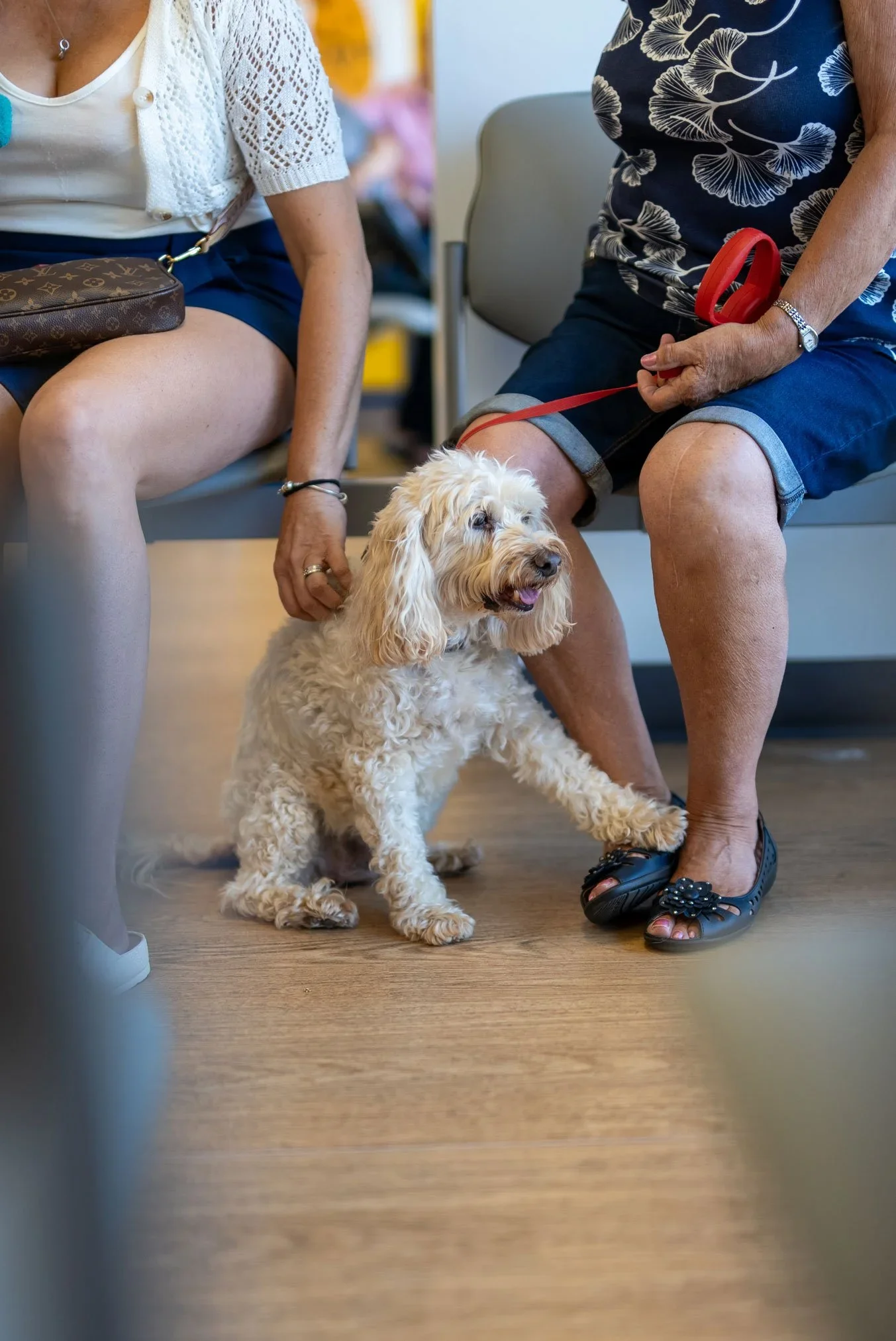
Animal hair, dander and odours can affect shared waiting areas. HEPA filtration can help with airborne particles, while suitable carbon media may manage selected smells. Cleaning and veterinary infection-control procedures remain essential. Guidance for veterinary practices gives useful context for managing shared spaces with animals. For pet owners and staff, managing hair and odour makes the shared area more pleasant.
What should nurseries consider?
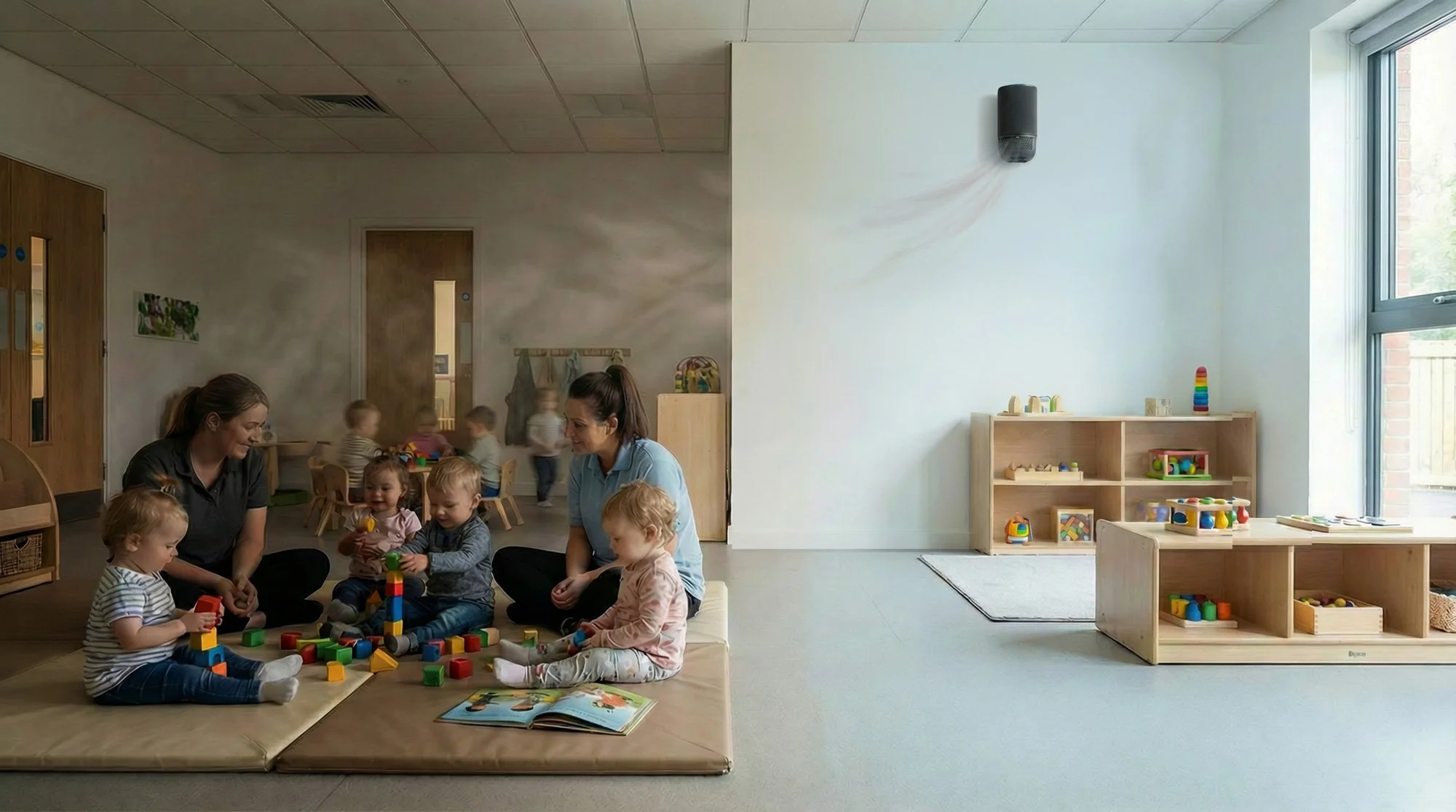
Young children may be more sensitive to their environments, so suitable ventilation, cleaning and moisture management are priorities. Air cleaners should be safely positioned, appropriately quiet and operated according to verified manufacturer guidance. Documented procedures help staff address complaints consistently without making unsupported health assurances. Young children also need equipment placed safely away from curious hands and busy play areas.
Are air purifiers appropriate for care homes?
Potentially, particularly where particle reduction would complement ventilation. Assess noise, access, trip risks, maintenance and resident needs. Equipment cannot substitute for care-setting infection-control requirements or clinical advice. A Hextio may be considered for a smaller waiting room with a defined odour problem. Residents may spend long periods in shared rooms, making comfort and quiet operation important.
Speak to a Clean Air Specialist
How should odour complaints be managed?
Identify whether the source is waste, cleaning chemicals, animals, cooking or moisture. Correcting it is generally more effective than masking it with fragrance. Gas-phase filtration may be a supplementary measure when correctly specified. Cleaning frequency should reflect occupancy and activities, especially around accessible shared surfaces. A persistent smell can be frustrating for visitors even when it is not hazardous.
Are air purifiers useful in shops and showrooms?
Yes, where fine particles or certain odours are identified. Entrances can admit outdoor pollution, while merchandise and cleaning products may emit gases. Select filtration according to the contaminant rather than general claims of freshness. Information for nurseries highlights the importance of safe placement and appropriate supervision. For a shop, choose equipment around its actual footfall, layout and daily activities.
Can a business verify air-quality improvements?
Use appropriate monitoring, maintain service records and describe equipment capabilities precisely. Avoid unsupported promises that premises are virus-free or completely pollutant-free. Demonstrate the controls actually implemented. Where visitors are particularly vulnerable, discuss proposed measures with responsible care or safety staff. Clear, factual explanations build trust far more than impressive but unverified claims.
Contact Us
Where can businesses find relevant examples?
We Share Clean Air provides sector pages for nurseries, veterinary practices, nursing homes, schools, offices and funeral directors. Use those resources to understand use cases, then verify individual device capabilities for your own space. Check whether the selected purifier's operating noise remains acceptable during normal customer interactions. Those examples can help you ask better questions before choosing a model for your premises.
-
Delivery Across The UK
We Share Clean Air supplies and installs professional HEPA air purification systems for businesses, schools, healthcare settings, care homes, and commercial environments across the UK with tailored support and reliable nationwide delivery.
-
Ongoing Maintenance Options
Our ongoing maintenance and servicing options help keep HEPA air purifiers operating efficiently, supporting long-term filtration performance, improved indoor air quality, and reduced disruption within commercial environments.
-
Customer Service
Our experienced clean air specialists provide tailored guidance, product recommendations, and ongoing support to help businesses choose the right HEPA air filtration solution for their environment, occupancy levels, and indoor air quality requirements.
Our Air Purification Technology
Our advanced air purification systems combine HEPA filtration, activated carbon filtration, and UV-C air treatment to help improve indoor air quality across commercial environments. Together, these technologies help reduce airborne particles, odours, pollutants, and contaminants while supporting cleaner, fresher, and healthier indoor spaces for staff, visitors, customers, and occupants.
-
1. HEPA 13 Filter
HEPA filtration captures microscopic airborne particles such as dust, pollen, allergens, mould spores, and fine particulate matter. Designed for high-efficiency air purification, HEPA filters help improve indoor air quality and support cleaner, healthier commercial environments.
Learn More -
2. Activated Carbon Filter
The activated carbon layer absorbs odours, chemical fumes and volatile organic compounds (VOCs) released from cleaning products, paints, furniture and cooking. This stage helps keep indoor air fresh and free from irritants that can affect respiratory comfort.
Learn More -
3. UVC
The UV-C treatment chamber uses short-wavelength ultraviolet light technology within the airflow system as part of the wider air purification process. Combined with HEPA and carbon filtration, this stage supports cleaner indoor air and helps maintain fresher commercial environments throughout the day.
Learn More
Discover our Products Certification and Testing
Find Out More
Explore the certifications and independent tests that demonstrate our air purifiers’ safety, reliability, and effectiveness. See how they meet international standards for reducing airborne bacteria, viruses, fine dust, and allergens.
Contact
Install HEPA Air Purifiers in
Your Nursery Today
New DfE guidance recommends that nurseries actively monitor indoor air quality. Most settings haven't started yet, and most have never had a professional test.
A free on-site health check takes one visit. We bring professional monitoring equipment, take CO₂ and particulate readings in your main activity rooms, and give you a plain-English summary of exactly what's in your air.
No jargon. No obligation. You keep your data regardless of what you decide.
We also work with care homes, funeral directors, hospitals and other sensitive environments where air quality directly affects the people in your care.
What to do: Complete the form, and we'll be in touch to arrange your Air Quality Test.
Not ready to book yet? Download the free Nursery Air Quality Risk Review first