
Home / For Business / Veterinary Practices
Veterinary Practices
HEPA Air Purifiers for Vets – Pet Odour, Allergy & Hygiene Control
Protecting pets, people and professionals in busy clinical environments
Veterinary practices face unique indoor air quality challenges, including pet hair, dander, odours and airborne contaminants. Effective air filtration helps create cleaner, safer clinical spaces for staff, pet owners and animals.
We provide professional HEPA air purifiers and commercial air filtration systems for veterinary clinics across the UK, designed for high-traffic treatment and waiting areas. By combining high-efficiency particulate filtration with integrated UVC pathogen control, our systems support enhanced hygiene management within enclosed clinical environments.
Speak to a Clean Air Specialist
Explore Our Products

Why Clean Air Matters in Veterinary Practices
Veterinary clinics and animal hospitals face distinct indoor air quality challenges due to high footfall, enclosed treatment rooms and the constant movement of animals and people. Without effective air filtration, airborne contaminants can accumulate quickly throughout the day.
Common air quality risks in vet practices include:
Continuous movement of pets, owners and staff
Pet dander, fur and airborne allergens
Airborne bacteria and respiratory droplets
Odours from animals, treatments and cleaning products
Dust and fine particles disturbed by activity
Limited ventilation in consultation and waiting areas
HEPA air purifiers remove 99.97 percent of airborne particles down to 0.3 microns, helping reduce circulating dander, fine particulates and airborne contaminants. When combined with integrated UVC technology, captured bacteria and viruses are exposed to controlled ultraviolet energy within the unit, supporting biological inactivation as part of a layered infection control strategy.
When correctly specified for room size and air changes per hour, veterinary air filtration systems provide both mechanical particle capture and enhanced pathogen management. Improved indoor air quality helps reduce stress for animals, enhance client comfort and create healthier working conditions for veterinary teams.
Find out More
What Our Products Protect Against
Our multi-stage air filtration systems are engineered to remove the airborne contaminants most commonly found in veterinary clinics and animal hospitals.
Pet Dander and Hair Particles
HEPA 13 filtration captures 99.97 percent of airborne particles down to 0.3 microns, including fine dander and fragmented hair that can irritate both humans and animals. This helps reduce circulating allergens within consultation and treatment areas.
Airborne Bacteria and Viruses
High-efficiency particulate filtration captures respiratory droplets and airborne particles that may contain bacteria or viruses. Integrated UVC treatment within the system helps neutralise retained pathogens, providing an additional layer of protection in enclosed clinical environments.
Odours
Activated carbon filters absorb odour molecules and volatile organic compounds rather than masking smells. This helps manage pet odours in waiting rooms, recovery areas and treatment spaces without introducing artificial fragrances.
Allergens and Dust
Removes pollen, dust mites and fine particulates brought in on animal coats, clothing and footwear, helping maintain cleaner indoor air throughout the practice.
VOCs from Cleaning Products
Absorbs chemical pollutants released by disinfectants and cleaning agents used daily in veterinary settings, improving overall air freshness and staff comfort.
Ultrafine Particles
Reduces microscopic airborne particles that are difficult to capture and can affect respiratory comfort, particularly in high-activity clinical areas. Combined HEPA filtration and controlled UVC exposure support improved management of biological contaminants retained within the system.
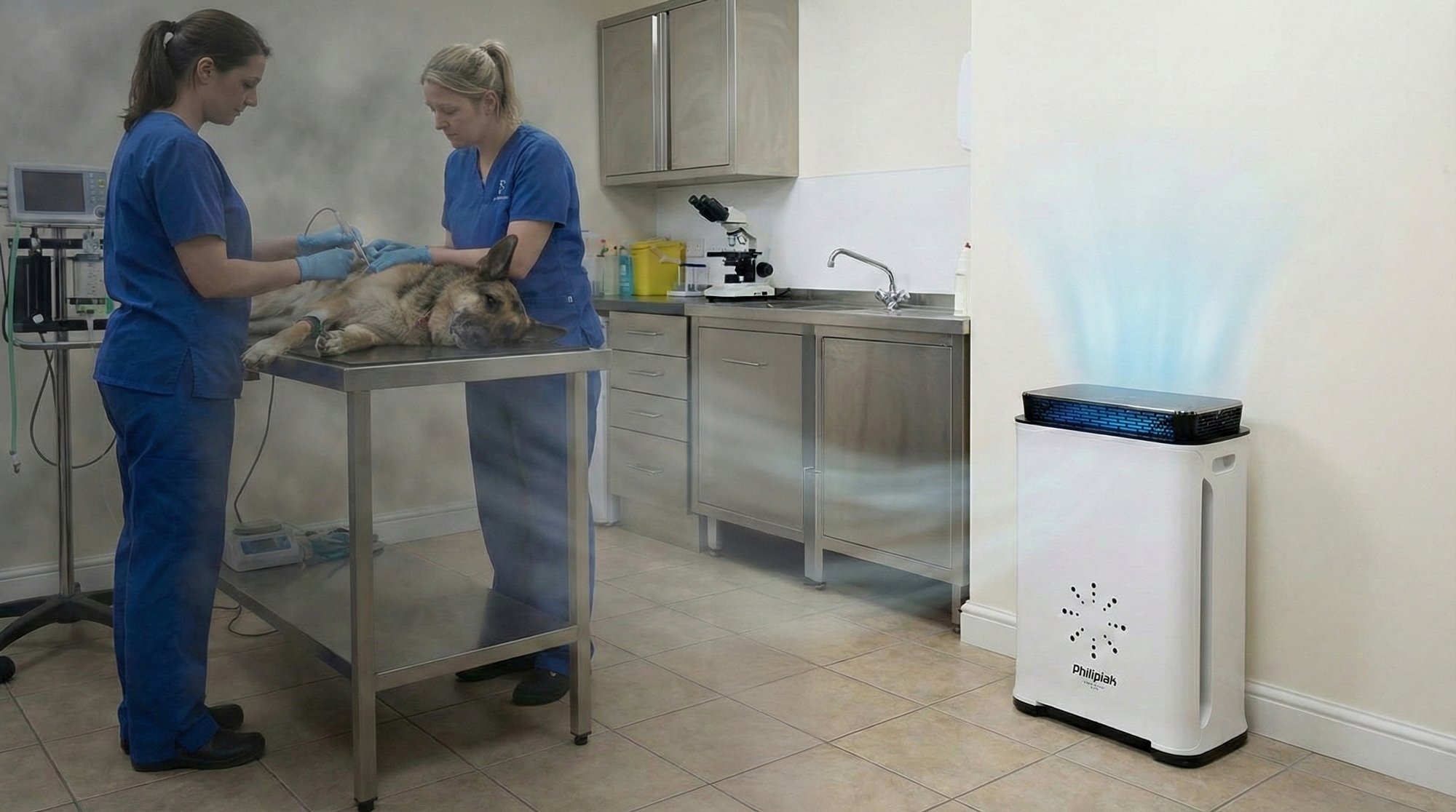
Benefits for Veterinary Practices
Indoor air quality plays a critical role in maintaining a safe, hygienic and comfortable clinical environment. In veterinary settings, effective air filtration reduces airborne pollutants such as pet dander, fine particulates and odour molecules that can accumulate throughout the day.
By integrating HEPA-grade filtration with UVC pathogen control, veterinary air purification systems support infection control measures by capturing and helping neutralise airborne bacteria and viruses within enclosed spaces. Cleaner indoor air enhances staff working conditions and creates a more reassuring atmosphere for clients. It also helps reduce airborne irritants that may affect animals recovering from procedures or experiencing respiratory sensitivity.
Professional air filtration contributes to higher environmental standards across treatment rooms, waiting areas and recovery spaces.
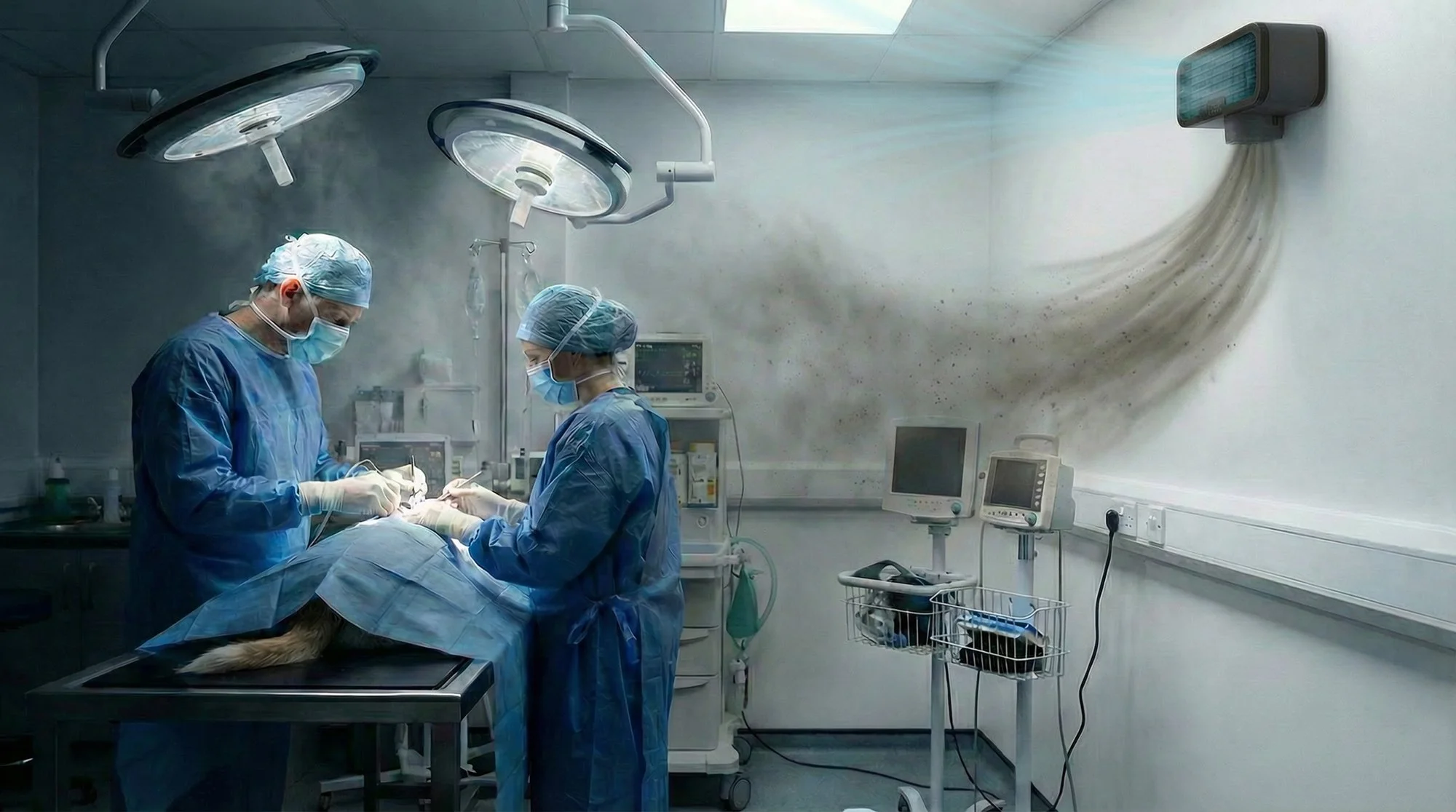
Where Our Systems are Used
Our veterinary air purification and filtration systems are designed to support every indoor space where animals, staff and clients spend time.
They are suitable for:
Waiting rooms
Consultation rooms
Treatment and recovery areas
Surgical preparation spaces as supplementary air support
Reception areas
Offices and staff rooms
Grooming and wash areas
Each area presents different occupancy levels, airflow patterns and contamination risks, which is why systems are specified according to room size and operational use. Systems are configured to achieve appropriate air changes per hour, ensuring airborne particles are captured and retained pathogens are treated within the filtration unit.
Wherever pets and people share indoor air, effective HEPA filtration supported by integrated UVC technology helps maintain cleaner, more comfortable and professionally managed clinical environments.
Our Products
Frequently Asked Questions About Air Purifiers for Veterinary Practices
How can an air purifier improve air quality in a veterinary practice?
Air purifiers improve air quality in veterinary practices by removing airborne pollutants, pet dander, allergens and odours. Using HEPA and carbon filtration, they help create a cleaner, healthier environment for animals, staff and visitors, reducing respiratory irritants and improving overall hygiene in clinical spaces.
Can air purifiers help reduce pet odours and smells in clinics?
Yes, air purifiers with carbon filtration effectively reduce pet odours in veterinary clinics. They absorb smells from animals, cleaning products and treatments, helping maintain a fresher, more pleasant environment for staff and clients while supporting overall air quality and hygiene standards.
Are air purifiers effective at removing pet dander and allergens in veterinary environments?
Yes, air purifiers with HEPA filtration are highly effective at removing pet dander, hair and allergens in veterinary environments. They capture microscopic particles, improving air quality and reducing allergy triggers for staff, visitors and animals within the clinic.
What type of air purifier is best for a veterinary practice or animal clinic?
The best air purifier for a veterinary practice is a professional system with HEPA and carbon filtration. It should handle pet dander, allergens and odours while operating continuously. Options like Aeroguard 360, Philipiak and Hextio provide effective solutions for different clinic sizes and environments.
Can air purifiers help reduce airborne bacteria and infections in veterinary settings?
Air purifiers can help reduce airborne bacteria and infection risks in veterinary settings by filtering harmful particles from the air. Advanced systems with HEPA filtration and air sterilisation technologies support infection control and improve overall hygiene within clinical environments.
Contact