
Home / For Business / Veterinary Practices / What type of air purifier is best for a veterinary practice or animal clinic?
Frequently Asked Questions
What type of air purifier is best for a veterinary practice or animal clinic?
Speak to a Clean Air Specialist
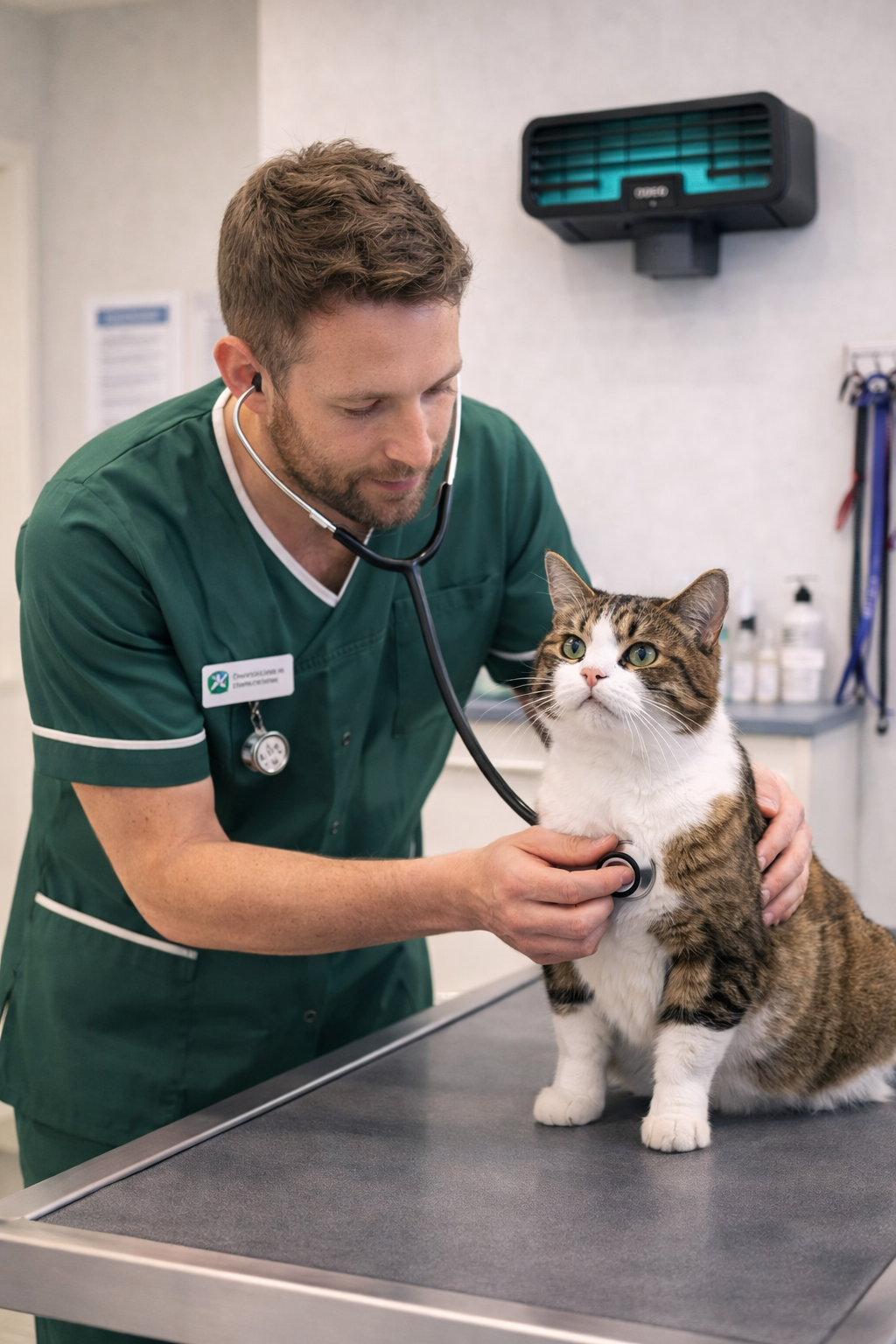
Choosing the right air purifier for veterinary clinics
Selecting the right air purifier depends on the size, layout and daily activity of the veterinary practice. Larger clinics with open waiting areas and multiple treatment rooms benefit from high-capacity systems like Aeroguard 360, which can handle higher air volumes. Smaller or enclosed spaces, such as consultation rooms and offices, are better suited to compact units like Aeroguard Mini or Odeo1. A combination of HEPA and carbon filtration is essential to effectively manage both airborne particles and persistent odours, ensuring a balanced approach to air quality across the entire practice.
Technology and performance considerations
Modern air purification systems go beyond basic filtration, incorporating advanced technologies to improve overall performance. Systems like the Philipiak air purifier combine multi-stage filtration with air sterilisation features, helping to reduce bacteria, airborne pollutants and microscopic contaminants. This added level of protection is particularly valuable in clinical environments where hygiene is critical. Maintenance is also a key consideration, as regular filter changes and system checks are required to maintain efficiency. Choosing a system designed for continuous operation ensures consistent air quality throughout long and demanding clinical hours.
Contact Us
Key features to look for
HEPA and carbon filtration
A combination of HEPA and carbon filters ensures that both allergens and odours are removed effectively. HEPA filters capture fine particles such as pet dander, dust and pollen, while carbon filters absorb odour-causing gases. Together, they create a complete solution, making the system highly effective as a pet air cleaner in veterinary environments where both particles and smells are present.
Coverage and capacity
It is important to match the air purifier to the size of the space it is intended to serve. Larger units like Aeroguard 360 are ideal for open areas such as waiting rooms, while systems like Hextio provide targeted purification for specific rooms or treatment areas. Choosing the correct capacity ensures consistent air cleaning without overworking the system.
Quiet operation
Noise levels are a key factor in veterinary settings, as loud equipment can cause stress for animals and disrupt the environment. Quiet systems help maintain a calm and controlled atmosphere. Products such as Odeo1 and Aeroguard Mini are designed for low-noise operation, allowing them to run continuously without disturbing patients, staff or clients.
Continuous use capability
Veterinary practices require air purification systems that can operate throughout the day without interruption. Professional-grade units are built for continuous use, ensuring that air is constantly filtered as new contaminants are introduced. This ongoing operation helps maintain stable air quality levels in busy clinical environments.
Ease of maintenance
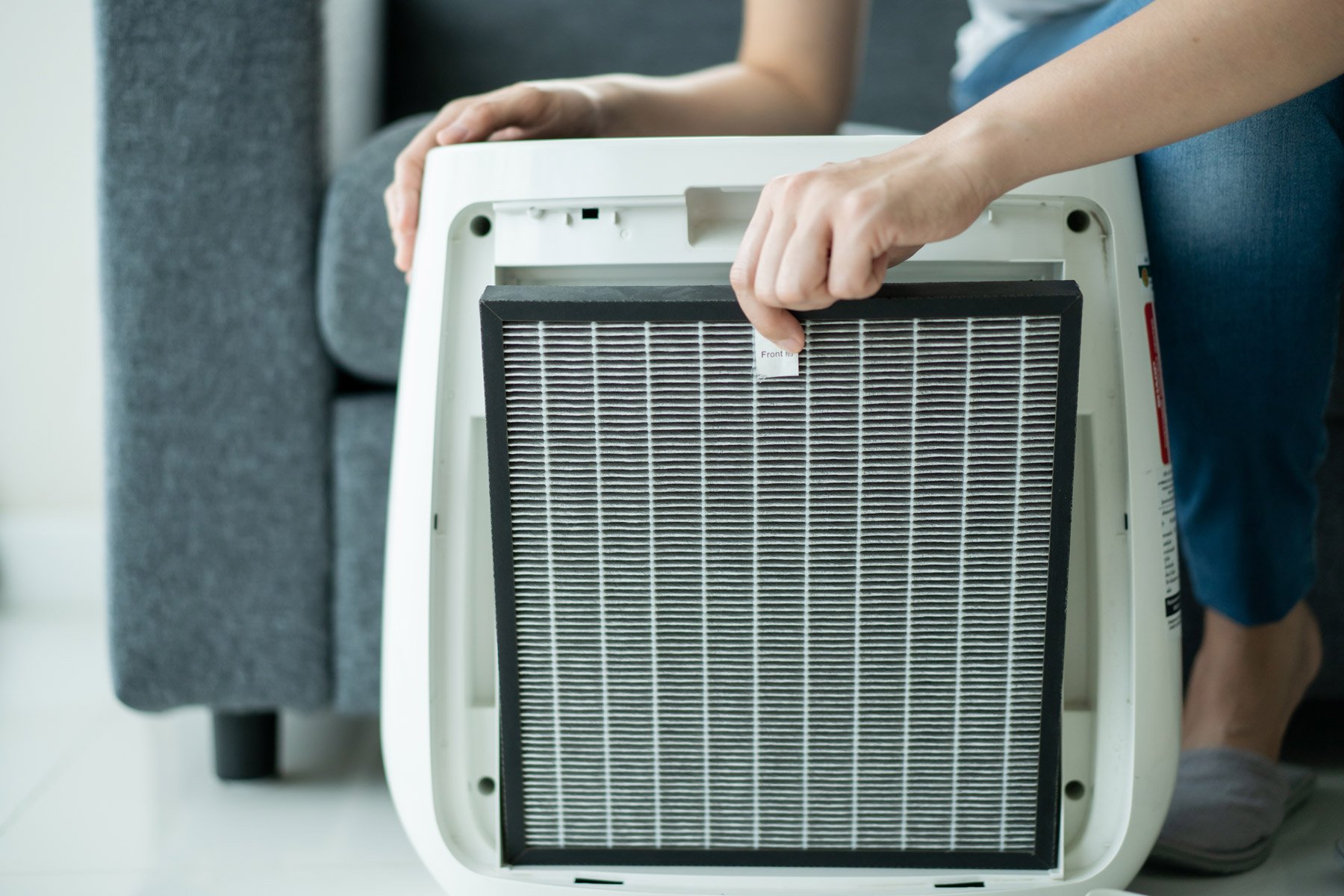
Simple maintenance is essential to ensure long-term performance. Systems with easy filter access and clear replacement schedules make it easier for staff to keep units running efficiently. Many professional air purifiers also include monitoring features that indicate when maintenance is required, helping avoid downtime and ensuring consistent air quality.
Conclusion
The best air purifier for a veterinary practice combines advanced filtration, appropriate coverage and reliable performance. Systems such as Aeroguard 360, Philipiak, Odeo1 and Hextio offer flexible solutions suited to different spaces within a clinic. By selecting the right combination of technology and capacity, practices can effectively manage airborne contaminants and odours. With regular maintenance and continuous operation, these systems help maintain high air quality, supporting a cleaner, safer and more comfortable environment for both animals and staff.
Contact Us
Contact
Install HEPA Air Purifiers in
Your Nursery Today
New DfE guidance recommends that nurseries actively monitor indoor air quality. Most settings haven't started yet, and most have never had a professional test.
A free on-site health check takes one visit. We bring professional monitoring equipment, take CO₂ and particulate readings in your main activity rooms, and give you a plain-English summary of exactly what's in your air.
No jargon. No obligation. You keep your data regardless of what you decide.
We also work with care homes, funeral directors, hospitals and other sensitive environments where air quality directly affects the people in your care.
What to do: Complete the form, and we'll be in touch to arrange your Air Quality Test.
Not ready to book yet? Download the free Nursery Air Quality Risk Review first