
Home / A Guide to Commercial Air Purification / The Importance of Indoor Air Quality
The Importance of Indoor Air Quality
The Importance of Indoor Air Quality

Understanding Indoor Air Quality
When you're running a workplace, it is easy to focus on what you can see: clean floors, tidy desks and fresh-looking rooms. But the air people breathe matters too. Dust, pollen, gases, humidity and pollution from outside can all affect indoor air quality. Understanding what's in the air helps you decide whether you need better ventilation, fewer pollution sources or a suitable air purifier. In an office, classroom or reception area, improving indoor air quality starts with understanding what people are exposed to and how long they spend there.
Speak to a Clean Air Specialist
What is indoor air quality (IAQ)?
Indoor air quality (IAQ) refers to conditions and contaminants in the air inside buildings. Relevant factors include particulate matter, gases such as carbon dioxide and volatile organic compounds, airborne biological material, humidity and temperature. No single measurement describes every aspect of IAQ. Practical guidance on HEPA filtration can help distinguish particle control from wider ventilation requirements. In a busy office, that simply means understanding what everyone is breathing throughout the day.
Why is good indoor air quality important for health and comfort?
People often spend many hours indoors, meaning exposure can accumulate over time. Certain pollutants can cause irritation or other health concerns depending on concentration, duration and individual sensitivity. Managing indoor air also helps make shared spaces more comfortable. For example, a compact Aeroguard Mini can be assessed where additional room-based particle cleaning is needed. For staff and visitors, the goal is a space that feels pleasant without ignoring invisible risks.
Which pollutants commonly occur indoors?
Typical examples include dust, pollen, pet dander, fine particulate matter, combustion particles, mould spores and volatile organic compounds from certain products. Pollutants can originate inside the building or enter from outdoors, and each type calls for different controls. Consider how seasonal pollen, commuting and nearby roads alter pollutant levels throughout the working day. For a street-facing business, this helps explain why air can change even with windows closed.
Speak to a Clean Air Specialist
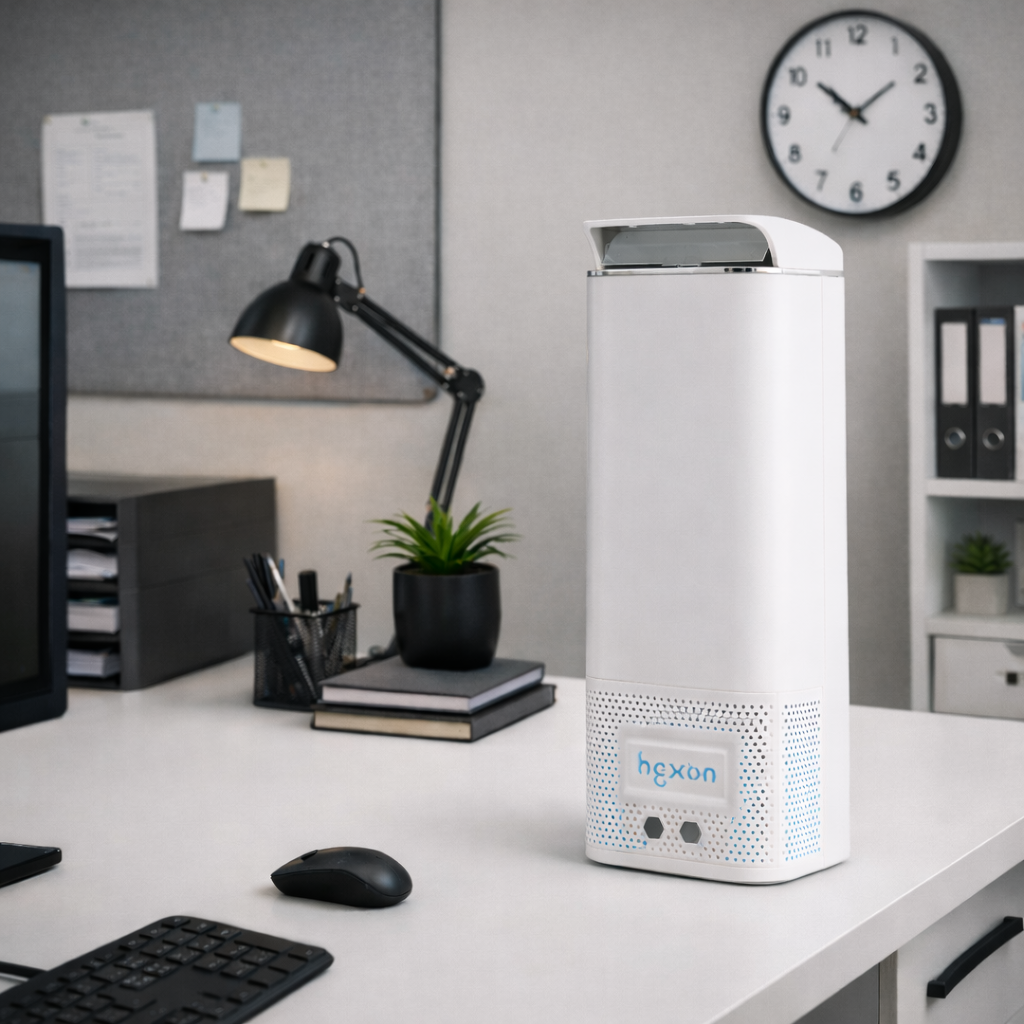


What is indoor air quality (IAQ)?
Indoor air quality (IAQ) refers to conditions and contaminants in the air inside buildings. Relevant factors include particulate matter, gases such as carbon dioxide and volatile organic compounds, airborne biological material, humidity and temperature. No single measurement describes every aspect of IAQ. Practical guidance on HEPA filtration can help distinguish particle control from wider ventilation requirements. In a busy office, that simply means understanding what everyone is breathing throughout the day.
Why is good indoor air quality important for health and comfort?
People often spend many hours indoors, meaning exposure can accumulate over time. Certain pollutants can cause irritation or other health concerns depending on concentration, duration and individual sensitivity. Managing indoor air also helps make shared spaces more comfortable. For example, a compact Aeroguard Mini can be assessed where additional room-based particle cleaning is needed. For staff and visitors, the goal is a space that feels pleasant without ignoring invisible risks.
Which pollutants commonly occur indoors?
Typical examples include dust, pollen, pet dander, fine particulate matter, combustion particles, mould spores and volatile organic compounds from certain products. Pollutants can originate inside the building or enter from outdoors, and each type calls for different controls. Consider how seasonal pollen, commuting and nearby roads alter pollutant levels throughout the working day. For a street-facing business, this helps explain why air can change even with windows closed.
Speak to a Clean Air Specialist
What is indoor air quality (IAQ)?
Indoor air quality (IAQ) refers to conditions and contaminants in the air inside buildings. Relevant factors include particulate matter, gases such as carbon dioxide and volatile organic compounds, airborne biological material, humidity and temperature. No single measurement describes every aspect of IAQ. Practical guidance on HEPA filtration can help distinguish particle control from wider ventilation requirements. In a busy office, that simply means understanding what everyone is breathing throughout the day.
Why is good indoor air quality important for health and comfort?
People often spend many hours indoors, meaning exposure can accumulate over time. Certain pollutants can cause irritation or other health concerns depending on concentration, duration and individual sensitivity. Managing indoor air also helps make shared spaces more comfortable. For example, a compact Aeroguard Mini can be assessed where additional room-based particle cleaning is needed. For staff and visitors, the goal is a space that feels pleasant without ignoring invisible risks.
Which pollutants commonly occur indoors?
Typical examples include dust, pollen, pet dander, fine particulate matter, combustion particles, mould spores and volatile organic compounds from certain products. Pollutants can originate inside the building or enter from outdoors, and each type calls for different controls. Consider how seasonal pollen, commuting and nearby roads alter pollutant levels throughout the working day. For a street-facing business, this helps explain why air can change even with windows closed.
Contact Us

How should a business improve indoor air first?
Investigate sources, check ventilation and moisture, use suitable cleaning methods and measure relevant conditions where practical. If airborne particles remain a concern, compare correctly sized HEPA-based purifiers alongside those measures rather than choosing a device in isolation. Keeping written observations also helps facility managers compare conditions before and after practical changes. The result should be a workable plan, not another machine that staff forget to switch on.
-
Delivery Across The UK
We Share Clean Air supplies and installs professional HEPA air purification systems for businesses, schools, healthcare settings, care homes, and commercial environments across the UK with tailored support and reliable nationwide delivery.
-
Ongoing Maintenance Options
Our ongoing maintenance and servicing options help keep HEPA air purifiers operating efficiently, supporting long-term filtration performance, improved indoor air quality, and reduced disruption within commercial environments.
-
Customer Service
Our experienced clean air specialists provide tailored guidance, product recommendations, and ongoing support to help businesses choose the right HEPA air filtration solution for their environment, occupancy levels, and indoor air quality requirements.
Our Air Purification Technology
Our advanced air purification systems combine HEPA filtration, activated carbon filtration, and UV-C air treatment to help improve indoor air quality across commercial environments. Together, these technologies help reduce airborne particles, odours, pollutants, and contaminants while supporting cleaner, fresher, and healthier indoor spaces for staff, visitors, customers, and occupants.
-
1. HEPA 13 Filter
HEPA filtration captures microscopic airborne particles such as dust, pollen, allergens, mould spores, and fine particulate matter. Designed for high-efficiency air purification, HEPA filters help improve indoor air quality and support cleaner, healthier commercial environments.
Learn More -
2. Activated Carbon Filter
The activated carbon layer absorbs odours, chemical fumes and volatile organic compounds (VOCs) released from cleaning products, paints, furniture and cooking. This stage helps keep indoor air fresh and free from irritants that can affect respiratory comfort.
Learn More -
3. UVC
The UV-C treatment chamber uses short-wavelength ultraviolet light technology within the airflow system as part of the wider air purification process. Combined with HEPA and carbon filtration, this stage supports cleaner indoor air and helps maintain fresher commercial environments throughout the day.
Learn More
Discover our Products Certification and Testing
Find Out More
Explore the certifications and independent tests that demonstrate our air purifiers’ safety, reliability, and effectiveness. See how they meet international standards for reducing airborne bacteria, viruses, fine dust, and allergens.
Contact
Install HEPA Air Purifiers in
Your Nursery Today
New DfE guidance recommends that nurseries actively monitor indoor air quality. Most settings haven't started yet, and most have never had a professional test.
A free on-site health check takes one visit. We bring professional monitoring equipment, take CO₂ and particulate readings in your main activity rooms, and give you a plain-English summary of exactly what's in your air.
No jargon. No obligation. You keep your data regardless of what you decide.
We also work with care homes, funeral directors, hospitals and other sensitive environments where air quality directly affects the people in your care.
What to do: Complete the form, and we'll be in touch to arrange your Air Quality Test.
Not ready to book yet? Download the free Nursery Air Quality Risk Review first