
Home / A Guide to Commercial Air Purification / Signs and Causes of Poor Indoor Air Quality
Signs and Causes of Poor Indoor Air Quality
Signs and Causes of Poor Indoor Air Quality
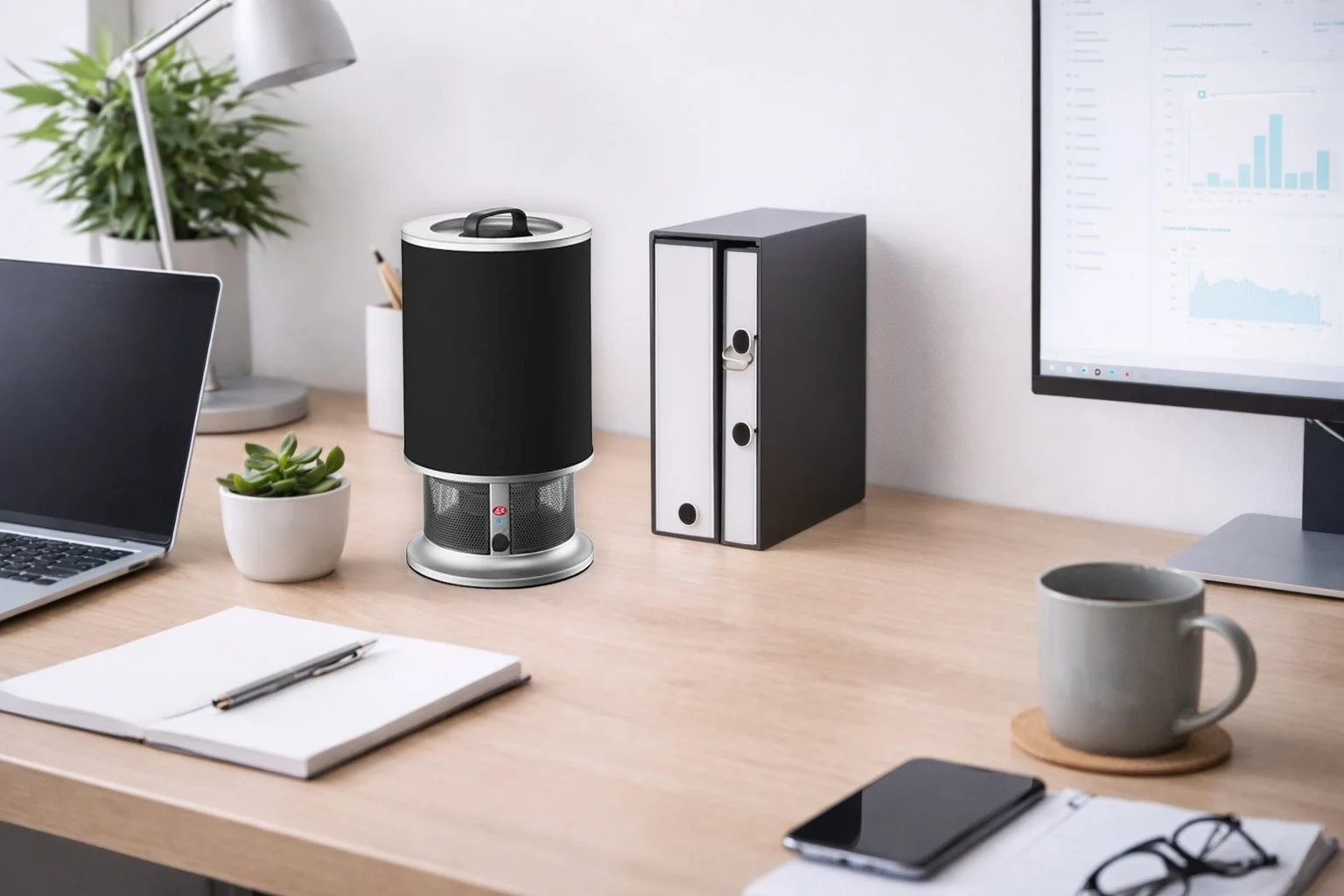
Poor Commercial Indoor Air Quality
A room can look spotless and still have an air-quality problem. You might notice dusty surfaces, a musty smell, condensation or people complaining that a meeting room feels stuffy. Other pollutants have no obvious smell at all. This guide explains the signs to look out for, what might be causing them and how to deal with the problem rather than simply covering it up. These signs of poor indoor air quality are useful starting points, but the most effective fix depends on identifying what is making the air feel or smell unpleasant.
Speak to a Clean Air Specialist
What are the signs of poor indoor air quality?
Persistent musty smells, dust accumulation, condensation, stuffiness and reports of irritation can justify investigation. These indicators are not specific diagnoses: some contaminants are invisible or odourless, while some strong smells may not signal serious exposure. A review of mould spores and moisture sources may reveal issues filtration alone cannot solve. For example, a musty meeting room may need a leak repaired rather than stronger filtration.
Can pollution be present without a smell?
Yes. Fine particles and some harmful gases cannot be reliably detected by smell. A lack of odour does not prove air is safe. Buildings with combustion appliances should have suitable safety measures, including appropriate carbon monoxide detection and servicing. Some substances require specific tests, because a standard particle monitor will not identify hazardous gases. You cannot judge the air in a busy workspace simply by whether it smells fresh.
Why does indoor dust accumulate?
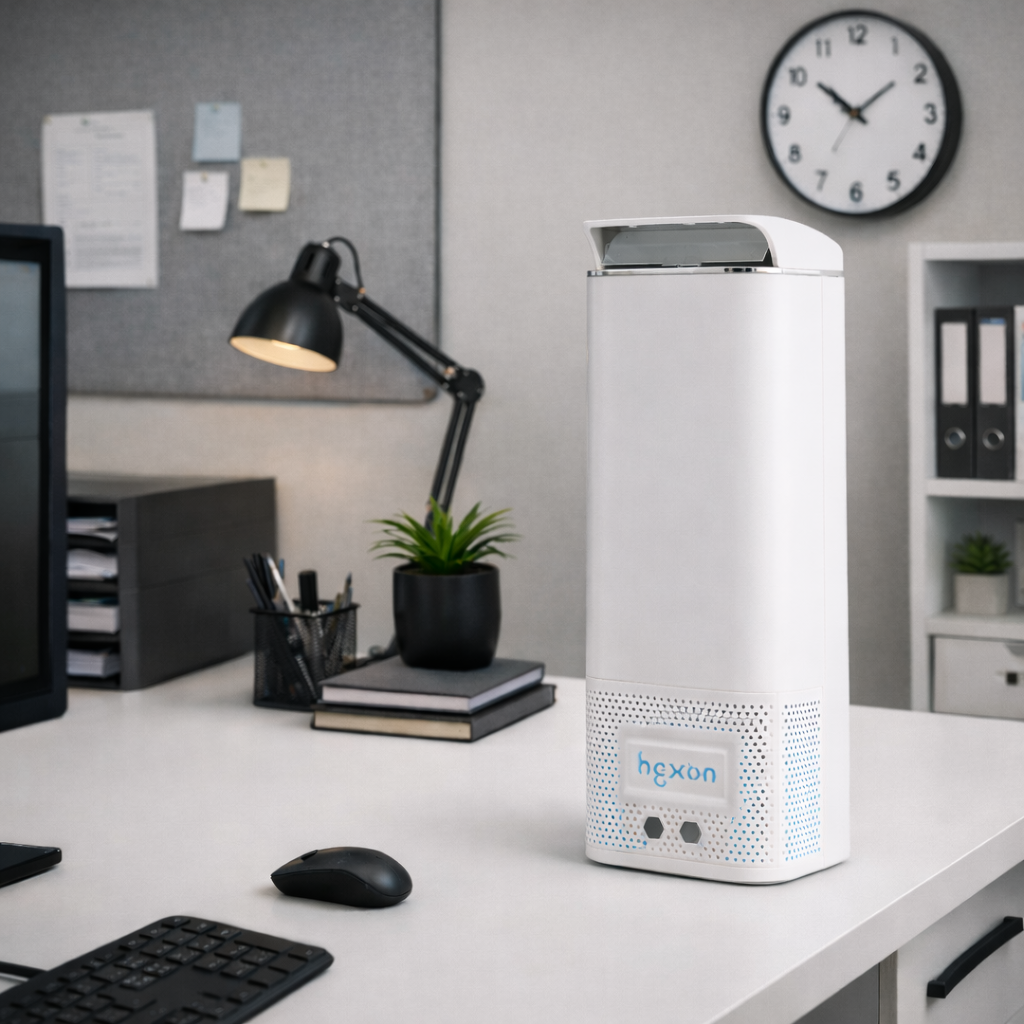
Sources include textiles, paper, people, outdoor soil, activities and furnishings. Movement can lift settled particles back into the air. Regular cleaning, control at the source and appropriate particle filtration can work together to reduce exposure. For smaller affected rooms, Hextio offers a compact purification option worth assessing against airflow needs. In practical terms, dust that keeps reappearing often points to an ongoing source.
Speak to a Clean Air Specialist

What causes lingering odours?
Cooking, waste, animals, cleaning products, dampness and building materials may all produce odours. First investigate and remove the source. Activated carbon may help adsorb some gaseous compounds, but a small or saturated filter may have limited capacity. Recurring smells should be logged alongside cleaning schedules, occupancy and any known building defects. A waiting room that smells unpleasant needs the cause checked before a purifier is added.
Why does indoor air feel stuffy or stale?
High occupancy, inadequate ventilation, heat and humidity may contribute. Elevated CO2 can suggest the outdoor-air supply is insufficient for the number of occupants. A recirculating purifier does not resolve elevated CO2 by itself. Check whether conditions change after windows open or the mechanical ventilation system starts running. If people regularly describe a room as 'airless', check ventilation and occupancy together.
Can damp affect air quality?
Leaks, condensation and persistent moisture can promote mould growth and other building problems. Air purifiers may capture airborne spores, but they cannot remove established mould or solve the moisture problem. Repair the underlying cause promptly. Clear reporting procedures help employees raise concerns without needing to identify particular contaminants themselves. For a nursery or office, stopping the damp matters far more than masking the smell.
Speak to a Clean Air Specialist
Do sprays and fragrances pollute indoor air?
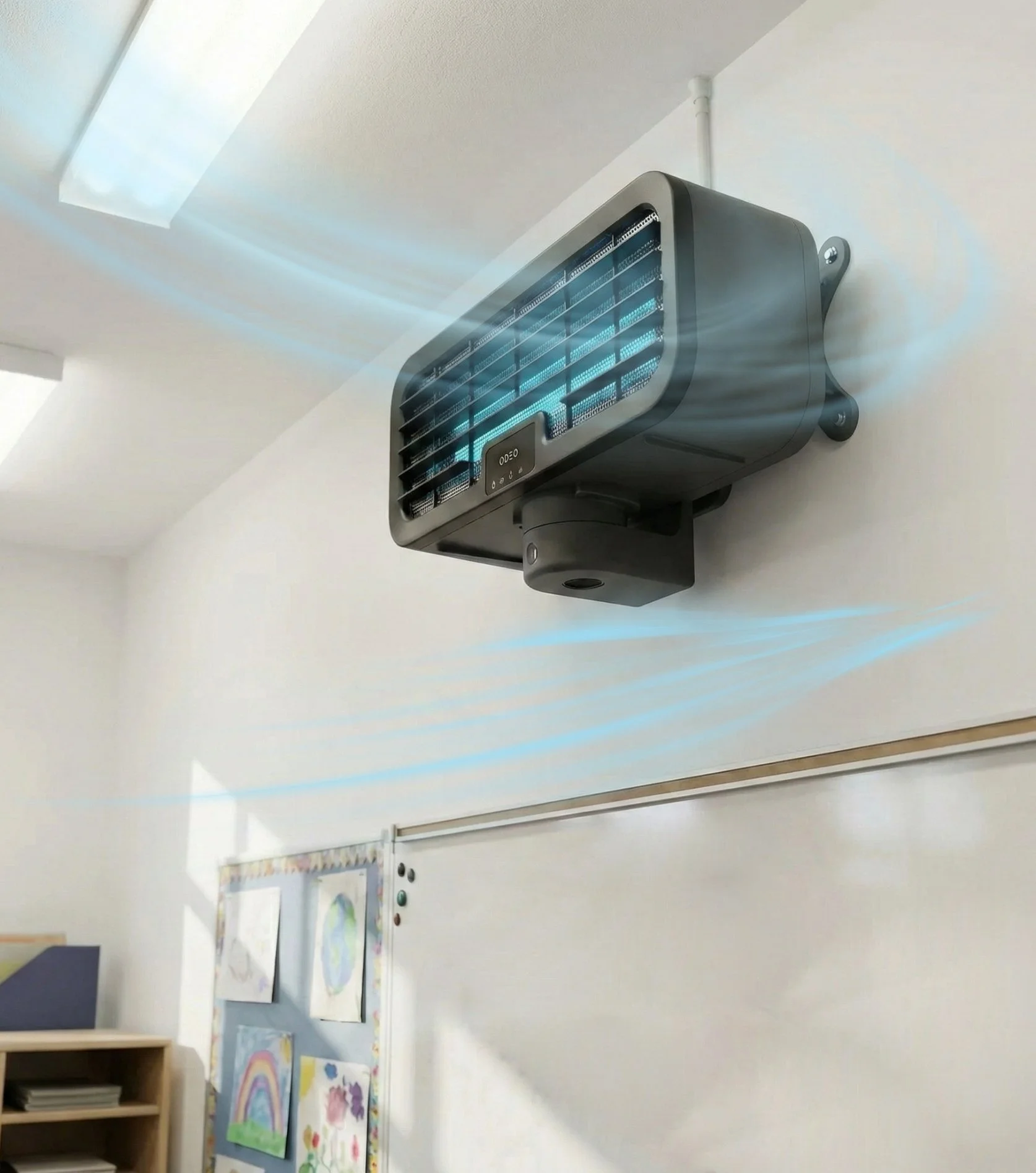
Some cleaning sprays, fragranced products and solvents release volatile compounds or droplets. Following instructions, selecting lower-emitting products and ensuring ventilation are useful preventive steps. Filtration should not be used to justify unnecessary chemical use. Where odour treatment is a priority, Odeo1 is a specialist upper-room system to investigate. This can matter when teams clean shared rooms several times during a working day.
Do animals change indoor air quality?
Hair, dander and animal-related odours may affect spaces such as veterinary practices. HEPA filtration can reduce particles suspended in air, while effective cleaning deals with settled allergens. Appropriate odour-control media may help with some smells. Compare measurements at consistent times to separate genuine patterns from ordinary short-term fluctuations. In a vet's waiting area, regular cleaning is especially important alongside any air cleaner.
How can you find the cause of poor indoor air quality?
Record where and when problems occur, compare occupied and unoccupied periods, examine moisture and ventilation systems, and review recent changes to products or activities. Targeted measurements can help; use a qualified specialist if the issue is persistent or potentially hazardous. Advice on allergies can also help distinguish airborne exposure from allergens settled on surfaces. That gives managers something specific to improve, rather than guessing at the problem.
Contact Us
When is professional assessment necessary?
Seek specialist assistance for suspected dangerous gases, unexplained persistent complaints, major damp damage or pollution from industrial activities. Serious exposure risks should be investigated at the source rather than addressed only with portable air cleaning. A qualified assessment should set out both likely sources and measurable steps for reducing exposure. Acting early is particularly important where children, older people or vulnerable visitors are involved.
-
Delivery Across The UK
We Share Clean Air supplies and installs professional HEPA air purification systems for businesses, schools, healthcare settings, care homes, and commercial environments across the UK with tailored support and reliable nationwide delivery.
-
Ongoing Maintenance Options
Our ongoing maintenance and servicing options help keep HEPA air purifiers operating efficiently, supporting long-term filtration performance, improved indoor air quality, and reduced disruption within commercial environments.
-
Customer Service
Our experienced clean air specialists provide tailored guidance, product recommendations, and ongoing support to help businesses choose the right HEPA air filtration solution for their environment, occupancy levels, and indoor air quality requirements.
Our Air Purification Technology
Our advanced air purification systems combine HEPA filtration, activated carbon filtration, and UV-C air treatment to help improve indoor air quality across commercial environments. Together, these technologies help reduce airborne particles, odours, pollutants, and contaminants while supporting cleaner, fresher, and healthier indoor spaces for staff, visitors, customers, and occupants.
-
1. HEPA 13 Filter
HEPA filtration captures microscopic airborne particles such as dust, pollen, allergens, mould spores, and fine particulate matter. Designed for high-efficiency air purification, HEPA filters help improve indoor air quality and support cleaner, healthier commercial environments.
Learn More -
2. Activated Carbon Filter
The activated carbon layer absorbs odours, chemical fumes and volatile organic compounds (VOCs) released from cleaning products, paints, furniture and cooking. This stage helps keep indoor air fresh and free from irritants that can affect respiratory comfort.
Learn More -
3. UVC
The UV-C treatment chamber uses short-wavelength ultraviolet light technology within the airflow system as part of the wider air purification process. Combined with HEPA and carbon filtration, this stage supports cleaner indoor air and helps maintain fresher commercial environments throughout the day.
Learn More
Discover our Products Certification and Testing
Find Out More
Explore the certifications and independent tests that demonstrate our air purifiers’ safety, reliability, and effectiveness. See how they meet international standards for reducing airborne bacteria, viruses, fine dust, and allergens.
Contact
Install HEPA Air Purifiers in
Your Nursery Today
New DfE guidance recommends that nurseries actively monitor indoor air quality. Most settings haven't started yet, and most have never had a professional test.
A free on-site health check takes one visit. We bring professional monitoring equipment, take CO₂ and particulate readings in your main activity rooms, and give you a plain-English summary of exactly what's in your air.
No jargon. No obligation. You keep your data regardless of what you decide.
We also work with care homes, funeral directors, hospitals and other sensitive environments where air quality directly affects the people in your care.
What to do: Complete the form, and we'll be in touch to arrange your Air Quality Test.
Not ready to book yet? Download the free Nursery Air Quality Risk Review first