
Home / A Guide to Commercial Air Purification / Air Purifier Maintenance and Care
Air Purifier Maintenance and Care
Improving Indoor Air Quality in the Workplace
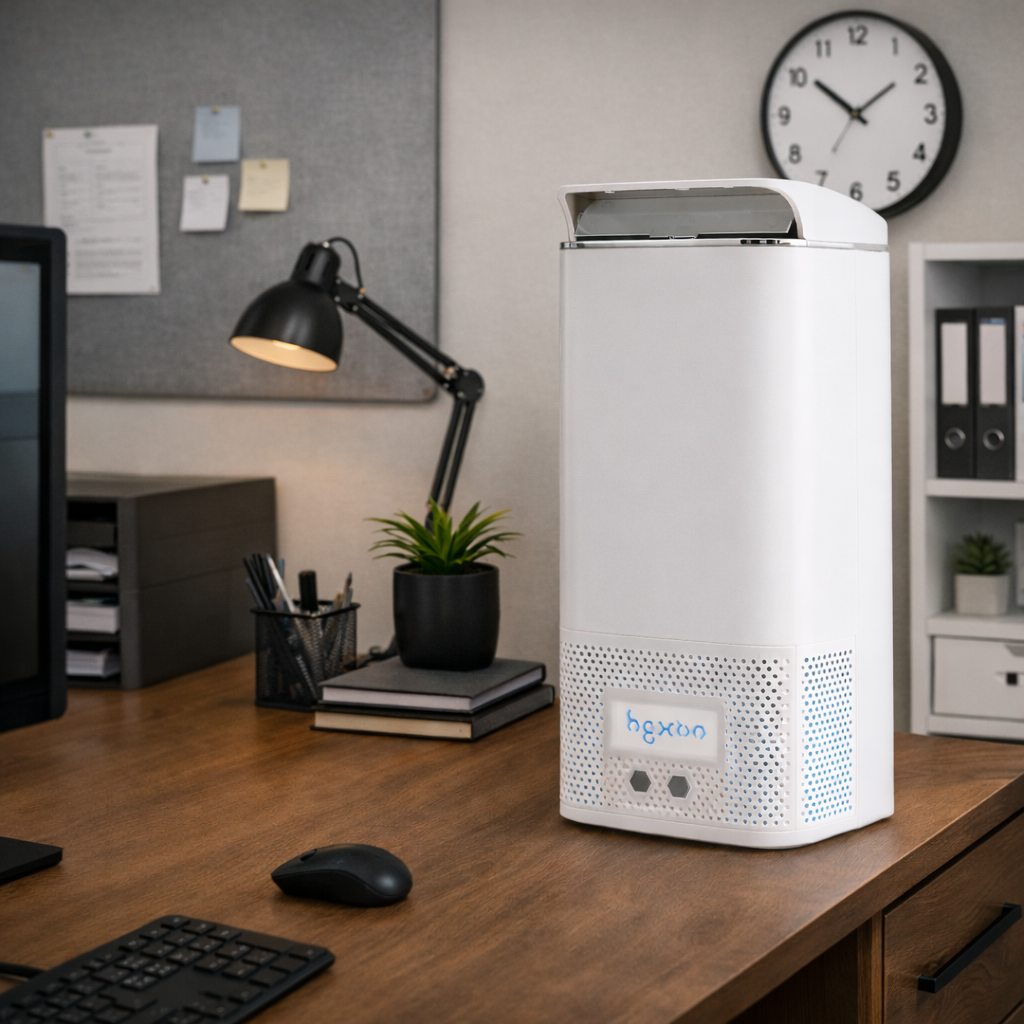
You don't need to start by buying an air purifier to improve the air at work. The best first step is to understand where problems happen, what causes them and how your building is ventilated. From there, you can tackle dust, damp or fumes at the source and add suitable filtration where it will make a useful difference. These steps to improve workplace indoor air quality apply to offices, nurseries, schools and other shared commercial environments, although each building needs its own assessment.
Speak to a Clean Air Specialist
How can you improve indoor air quality at work?
Map the rooms, occupancy patterns, activities and existing complaints. Inspect ventilation and moisture sources, then take appropriate measurements where useful. Avoid buying equipment before identifying the problem. Businesses can also use the offices guidance to understand common shared-workspace air concerns. Start with the rooms people complain about most and the activities taking place there.
Why is controlling sources important?
Preventing pollution at origin usually gives more dependable results than collecting it after release. Repair damp, maintain combustion appliances, manage dust-generating activities and choose lower-emitting products where feasible. Hextio provides a compact air treatment example when evaluating smaller occupied rooms. If you stop the source, you reduce the amount of pollution any purifier has to handle.
How can you improve ventilation in the workplace?
Check mechanical systems and vents, verify the outdoor-air supply suits occupancy and use natural ventilation appropriately. CO2 trends can help identify ventilation shortfalls. Account for local outdoor pollution and building-safety constraints. The initial plan should identify who will inspect ventilation and follow up complaints. In a crowded room, fresher outdoor air often matters more than a more powerful filter.
Speak to a Clean Air Specialist



When should a workplace use air purifiers?
Consider supplementary air cleaning for airborne particles or selected gases that remain a concern despite appropriate source reduction and ventilation. Select technology according to pollutant type and verified device performance. Clear communication helps staff understand what filtration can and cannot change in their workplace. A purifier is most useful when it deals with a specific problem that remains.
How can offices reduce airborne dust?
Use effective cleaning, entry mats and source control. Where fine particles are still present, suitable HEPA-based filtration may reduce concentrations. A purifier cannot replace surface cleaning. Moisture problems deserve their own corrective actions rather than being grouped under general dust. For staff, a cleaner desk and cleaner circulating air are two parts of the same approach.
How should damp and mould be addressed?
Find and repair leaks, control condensation and remediate affected materials appropriately. Capturing airborne spores alone will not stop mould growth. Seek qualified help where damage or exposure is substantial. For larger shared spaces, compare Aeroguard 360 specifications with room volumes and circulation needs. For occupants, fixing a damp problem is the lasting improvement; filtration is only supplementary.
Speak to a Clean Air Specialist
What is important in schools and nurseries?
Prioritise adequate fresh air, safe cleaning and moisture management. Supplementary filtration should be quiet enough for learning, safely positioned around children and specified for the room size and activity. Nursery air purification guidance offers additional considerations for rooms used by younger occupants. The chosen equipment must also fit safely into the way children learn and play.
How do you size units for different rooms?
Multiply floor area by ceiling height to estimate volume, then compare required additional particle-cleaning rates with device CADR. Consider actual fan speed, partitions and airflow distribution. Separate rooms often need separate provision. Review the indoor air technology information when comparing different stages of treatment. You are trying to deliver useful cleaning across the room, not just beside the machine.
How can workplaces evaluate progress?
Record baseline conditions, review particle and CO2 trends appropriately, check maintenance and compare observations under similar conditions. Reassess as building use, staffing or activities change. Record operational changes alongside measurements so later comparisons remain meaningful and fair. A few consistent checks show whether a change is working in everyday conditions.
Contact Us
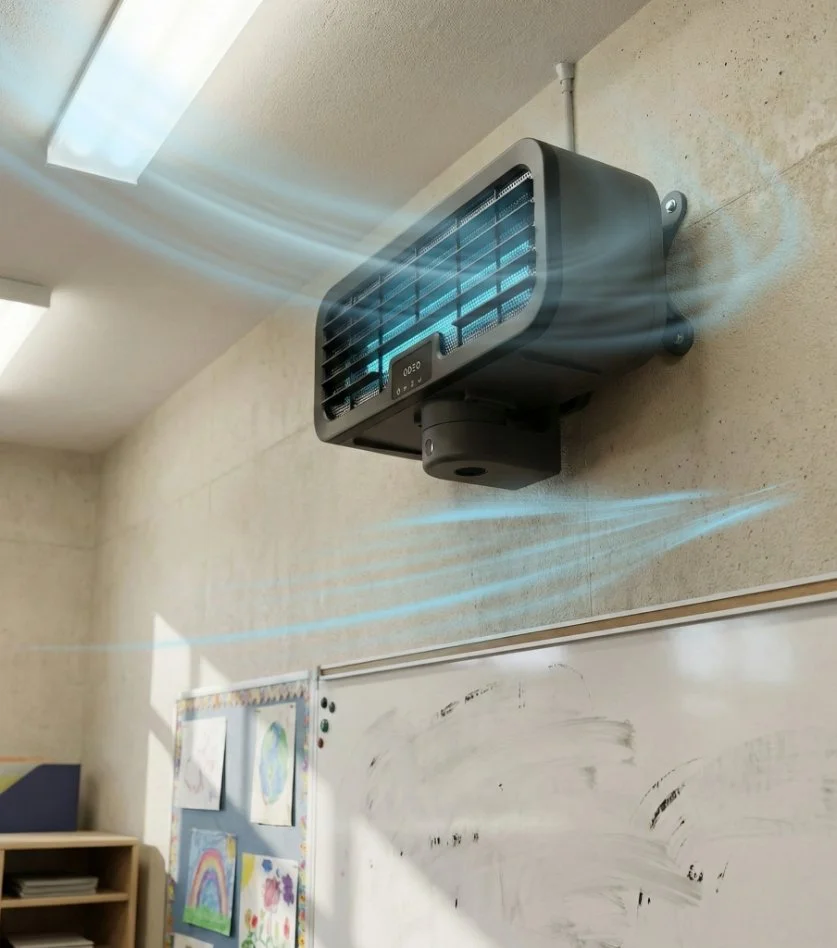
What is We Share Clean Air's role?
We Share Clean Air supplies several air treatment products and provides guidance on technology and servicing. Review the specific product specification and suitability for your premises as part of a wider plan that includes ventilation and source control. A written maintenance schedule helps preserve any improvements achieved after equipment installation. The aim is a workplace where cleaner air is practical to maintain, not just promised.
-
Delivery Across The UK
We Share Clean Air supplies and installs professional HEPA air purification systems for businesses, schools, healthcare settings, care homes, and commercial environments across the UK with tailored support and reliable nationwide delivery.
-
Ongoing Maintenance Options
Our ongoing maintenance and servicing options help keep HEPA air purifiers operating efficiently, supporting long-term filtration performance, improved indoor air quality, and reduced disruption within commercial environments.
-
Customer Service
Our experienced clean air specialists provide tailored guidance, product recommendations, and ongoing support to help businesses choose the right HEPA air filtration solution for their environment, occupancy levels, and indoor air quality requirements.
Our Air Purification Technology
Our advanced air purification systems combine HEPA filtration, activated carbon filtration, and UV-C air treatment to help improve indoor air quality across commercial environments. Together, these technologies help reduce airborne particles, odours, pollutants, and contaminants while supporting cleaner, fresher, and healthier indoor spaces for staff, visitors, customers, and occupants.
-
1. HEPA 13 Filter
HEPA filtration captures microscopic airborne particles such as dust, pollen, allergens, mould spores, and fine particulate matter. Designed for high-efficiency air purification, HEPA filters help improve indoor air quality and support cleaner, healthier commercial environments.
Learn More -
2. Activated Carbon Filter
The activated carbon layer absorbs odours, chemical fumes and volatile organic compounds (VOCs) released from cleaning products, paints, furniture and cooking. This stage helps keep indoor air fresh and free from irritants that can affect respiratory comfort.
Learn More -
3. UVC
The UV-C treatment chamber uses short-wavelength ultraviolet light technology within the airflow system as part of the wider air purification process. Combined with HEPA and carbon filtration, this stage supports cleaner indoor air and helps maintain fresher commercial environments throughout the day.
Learn More
Discover our Products Certification and Testing
Find Out More
Explore the certifications and independent tests that demonstrate our air purifiers’ safety, reliability, and effectiveness. See how they meet international standards for reducing airborne bacteria, viruses, fine dust, and allergens.
Contact
Install HEPA Air Purifiers in
Your Nursery Today
New DfE guidance recommends that nurseries actively monitor indoor air quality. Most settings haven't started yet, and most have never had a professional test.
A free on-site health check takes one visit. We bring professional monitoring equipment, take CO₂ and particulate readings in your main activity rooms, and give you a plain-English summary of exactly what's in your air.
No jargon. No obligation. You keep your data regardless of what you decide.
We also work with care homes, funeral directors, hospitals and other sensitive environments where air quality directly affects the people in your care.
What to do: Complete the form, and we'll be in touch to arrange your Air Quality Test.
Not ready to book yet? Download the free Nursery Air Quality Risk Review first