
Home / A Guide to Commercial Air Purification / Air Purifiers and Employee Wellbeing
Air Purifiers and Employee Wellbeing
Air Purifiers and Employee Wellbeing
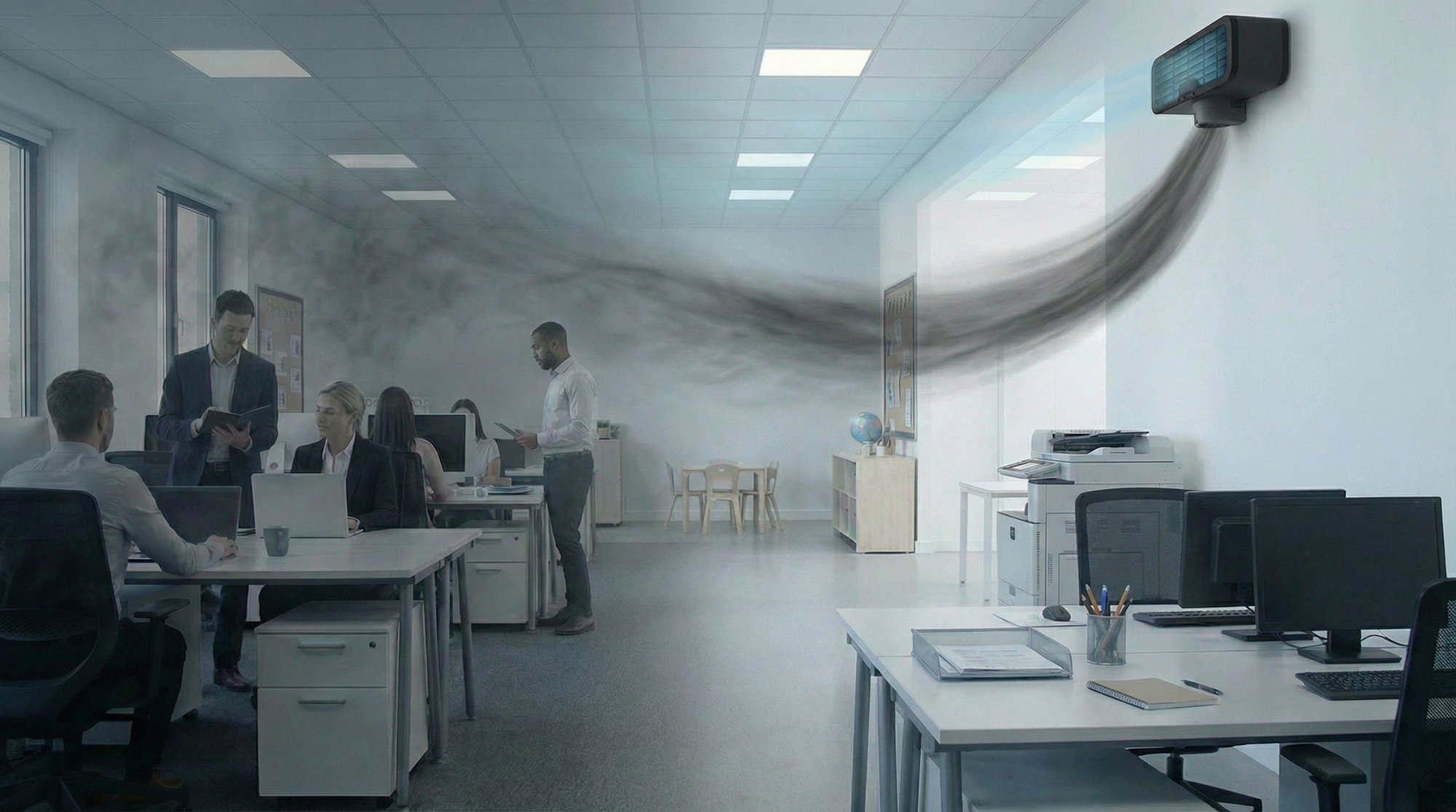
People spend a big part of their day at work, so their surroundings matter. Dusty offices, lingering smells and stuffy meeting rooms can all make the working day less comfortable. Air purifiers can help with some of these issues, but they work best alongside good ventilation and cleaning. Here's what employers should know before choosing a system. Improving office air quality is about helping people feel comfortable at work, not making unsupported promises about performance, productivity or sickness absence.
Speak to a Clean Air Specialist
How does indoor air quality affect employee wellbeing?
Dust, odours and poor ventilation can make working conditions unpleasant. Managing these conditions can contribute to a better workplace environment, although wellbeing is influenced by many factors beyond air purification. Office managers should review ventilation alongside any workplace air purification investment or wellbeing initiative. For employees, that means fewer avoidable irritants in the spaces where they spend their day.
Does ventilation influence alertness?
Crowded, inadequately ventilated rooms can accumulate carbon dioxide and feel stuffy. Studies associate some indoor environmental conditions with performance, but the appropriate way to address elevated CO2 is increased outdoor-air ventilation. A compact Hextio may suit focused air treatment in a smaller office or reception area. For a crowded meeting room, improving fresh-air supply can help address the underlying stuffiness.
Can HEPA units help workers with allergies?
HEPA-based air cleaning can reduce some airborne pollen and dander while running. It is not a substitute for cleaning and allergen source management, and it should not be presented as a guaranteed treatment for symptoms. Track changes across seasons because heating, pollen and window use can alter conditions. Someone sensitive to pollen may value cleaner circulating air, particularly during peak season.
Speak to a Clean Air Specialist


Do air purifiers work in open-plan offices?
Yes, where room volume, partitions, doors and required airflow are properly considered. One small unit may not serve a large floor effectively. A combination of units or improvements to existing ventilation may be more suitable. Consult the offices guidance for examples of differing room layouts and working patterns. In practice, placement and sizing make the difference between useful equipment and background noise.
Will installing purifiers reduce sick days?
That outcome cannot be guaranteed. Air filtration can lower some airborne exposures, but absence has many contributing causes. Respiratory-infection precautions should also include appropriate ventilation and other relevant public-health practices. Any infection-related discussion should distinguish measured exposure reduction from unproven absence claims. It is better to describe realistic air-quality improvements than promise a measurable drop in absence.
How important is purifier noise?
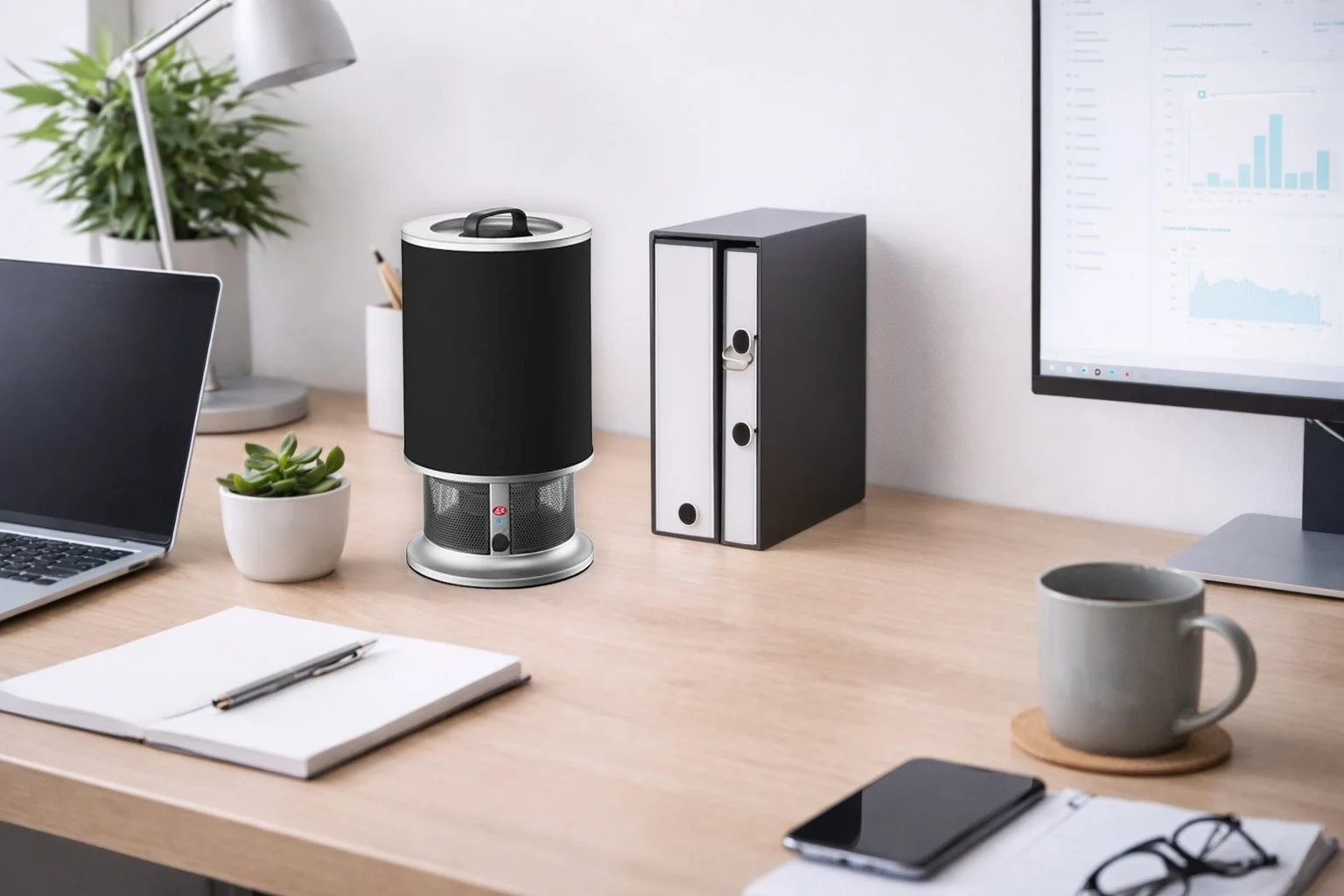
Very important in concentration-heavy offices and meeting rooms. Compare sound levels at the speed that delivers the required cleaning performance. An extremely quiet setting may move much less air than a manufacturer's maximum-rated setting. Aeroguard Mini is another compact product option for comparing practical workspace placement and operation. If the fan is too loud, staff may turn it down and reduce the cleaning effect.
Speak to a Clean Air Specialist
Where should meeting-room purifiers go?
Position units where airflow is unobstructed and consider the room's volume and occupancy. Because meeting rooms can become crowded quickly, check adequate outdoor-air provision as well as any additional particle cleaning. Staff feedback may identify areas where equipment placement causes draughts or unwanted noise. This can be particularly useful when a small room is used for back-to-back meetings.
Do different employees need different measures?
Staff with allergies or respiratory sensitivities may report different concerns from colleagues. Discuss needs individually, review pollutant sources and follow workplace health guidance. Filtration cannot replace required exposure controls or protective equipment. Meeting-room schedules can inform operating hours without removing the need for fresh-air supply. A simple discussion with staff can reveal concerns that a building-wide average misses.
How can employers measure improvements in office air quality?
Review ventilation and moisture, monitor relevant parameters, record complaints and compare conditions after changes. Interpret employee surveys alongside measurements, not as proof that a specific intervention caused better productivity. Link reported concerns to objective observations whenever possible, rather than drawing conclusions from anecdotes. You might find one problem room that needs attention rather than replacing equipment everywhere.
Contact Us

What should an office action plan contain?
Define responsible staff and checks for ventilation, cleaning, moisture, maintenance and any purifiers. Reassess when occupancy changes. Sector-specific office guidance and product information can help inform choices, subject to independent performance specifications. Review filter access and servicing duties when deciding who manages the equipment day to day. The best plan is one people can actually follow without disrupting their working day.
-
Delivery Across The UK
We Share Clean Air supplies and installs professional HEPA air purification systems for businesses, schools, healthcare settings, care homes, and commercial environments across the UK with tailored support and reliable nationwide delivery.
-
Ongoing Maintenance Options
Our ongoing maintenance and servicing options help keep HEPA air purifiers operating efficiently, supporting long-term filtration performance, improved indoor air quality, and reduced disruption within commercial environments.
-
Customer Service
Our experienced clean air specialists provide tailored guidance, product recommendations, and ongoing support to help businesses choose the right HEPA air filtration solution for their environment, occupancy levels, and indoor air quality requirements.
Our Air Purification Technology
Our advanced air purification systems combine HEPA filtration, activated carbon filtration, and UV-C air treatment to help improve indoor air quality across commercial environments. Together, these technologies help reduce airborne particles, odours, pollutants, and contaminants while supporting cleaner, fresher, and healthier indoor spaces for staff, visitors, customers, and occupants.
-
1. HEPA 13 Filter
HEPA filtration captures microscopic airborne particles such as dust, pollen, allergens, mould spores, and fine particulate matter. Designed for high-efficiency air purification, HEPA filters help improve indoor air quality and support cleaner, healthier commercial environments.
Learn More -
2. Activated Carbon Filter
The activated carbon layer absorbs odours, chemical fumes and volatile organic compounds (VOCs) released from cleaning products, paints, furniture and cooking. This stage helps keep indoor air fresh and free from irritants that can affect respiratory comfort.
Learn More -
3. UVC
The UV-C treatment chamber uses short-wavelength ultraviolet light technology within the airflow system as part of the wider air purification process. Combined with HEPA and carbon filtration, this stage supports cleaner indoor air and helps maintain fresher commercial environments throughout the day.
Learn More
Discover our Products Certification and Testing
Find Out More
Explore the certifications and independent tests that demonstrate our air purifiers’ safety, reliability, and effectiveness. See how they meet international standards for reducing airborne bacteria, viruses, fine dust, and allergens.
Contact
Install HEPA Air Purifiers in
Your Nursery Today
New DfE guidance recommends that nurseries actively monitor indoor air quality. Most settings haven't started yet, and most have never had a professional test.
A free on-site health check takes one visit. We bring professional monitoring equipment, take CO₂ and particulate readings in your main activity rooms, and give you a plain-English summary of exactly what's in your air.
No jargon. No obligation. You keep your data regardless of what you decide.
We also work with care homes, funeral directors, hospitals and other sensitive environments where air quality directly affects the people in your care.
What to do: Complete the form, and we'll be in touch to arrange your Air Quality Test.
Not ready to book yet? Download the free Nursery Air Quality Risk Review first