
Home / For Business / Nurseries / How can an air purifier improve air quality in a nursery setting?
Frequently Asked Questions
How can an air purifier improve air quality in a nursery setting?
Speak to a Clean Air Specialist
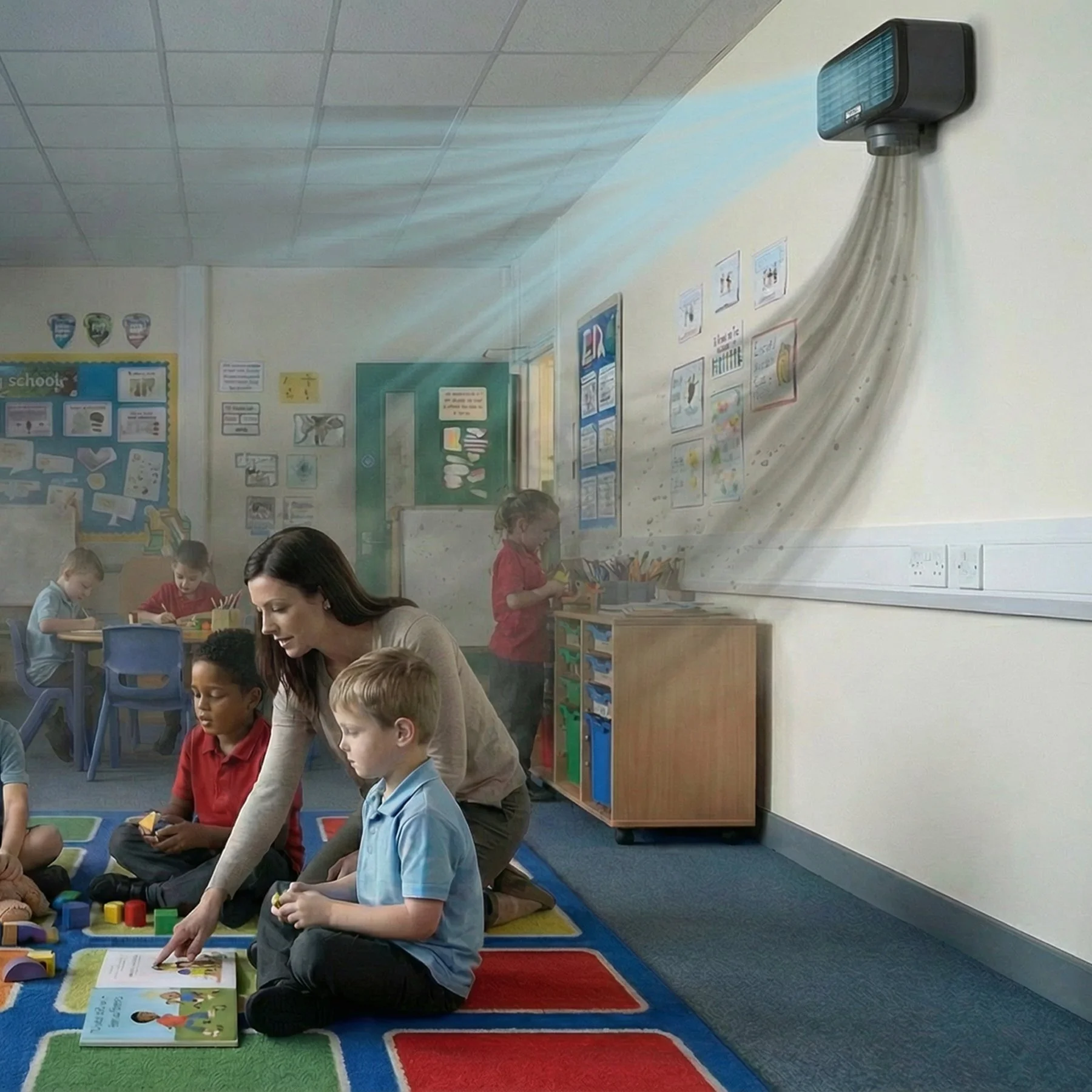
Improving indoor air quality in nurseries
Air quality in nurseries can quickly decline due to high occupancy, limited ventilation, and everyday activities such as play, eating and cleaning. An air purifier for nursery environments works continuously to remove airborne particles, including dust, pollen, bacteria and volatile organic compounds. This helps create a cleaner, fresher atmosphere that supports both children and staff. In enclosed classroom settings where pollutants can build up throughout the day, consistent air purification can make a noticeable difference to comfort, wellbeing and overall hygiene standards.
How air purifiers work in childcare environments
Modern air purifiers for daycare and nursery settings use advanced multi-stage filtration systems, including HEPA filters and activated carbon technology. HEPA filters capture microscopic particles such as allergens, fine dust and airborne pollutants, while carbon filters help to remove odours, fumes and harmful gases. These systems are designed to run quietly and efficiently, making them ideal for nurseries where maintaining a calm and distraction-free environment is essential. By continuously circulating and cleaning the air, they help maintain consistent, high-quality indoor air throughout the day.
Contact Us
Key benefits of air purifiers in nurseries
1. Removal of airborne particles
Air purifiers are highly effective at capturing airborne particles such as dust, pollen and fine particulate matter that can easily accumulate in busy nursery environments. These particles are often invisible but can irritate young lungs and contribute to poor indoor air quality. By continuously filtering the air, an air purifier for nursery settings helps reduce these contaminants, creating a cleaner and safer space where children can play, learn and rest without exposure to unnecessary airborne irritants.
2. Reduction of allergens
In nursery environments, allergens such as pet dander, mould spores and pollen can be brought in from outside or transferred on clothing and surfaces. An air purifier nursery solution helps remove these allergens from the air, reducing the likelihood of allergic reactions in sensitive children. This is particularly important for nurseries supporting children with asthma or allergies, as maintaining low allergen levels can significantly improve comfort, reduce symptoms, and support a healthier indoor environment.
3. Odour control
Nurseries naturally produce a range of odours from nappies, food preparation, cleaning products and general daily activities. Activated carbon filters within air purifiers are designed to absorb and neutralise these smells rather than simply masking them. This helps maintain a fresher and more pleasant environment for both children and staff. Effective odour control also contributes to the perception of cleanliness, which is important for parents, visitors and regulatory standards within childcare settings.
4. Consistent air circulation
Air purifiers help maintain consistent air circulation throughout nursery rooms by continuously drawing in air, filtering it, and redistributing it back into the space. This prevents the build-up of stagnant air where pollutants can linger and ensures that clean air reaches all areas of the room. In busy classroom environments, this consistent airflow helps maintain stable air quality levels throughout the day, supporting a healthier and more comfortable indoor atmosphere for everyone present.
5. Support for staff wellbeing
While the focus is often on children, nursery staff also benefit significantly from improved air quality. Cleaner air can reduce fatigue, minimise exposure to airborne irritants and create a more comfortable working environment. Over time, this can support staff wellbeing, productivity and overall job satisfaction. By investing in an air purifier for daycare environments, nurseries are not only improving conditions for children but also creating a healthier space for employees who spend long hours indoors.

Conclusion
Investing in an air purifier for nursery environments is a proactive way to improve indoor air quality and create a healthier space for children to grow and learn. By removing pollutants, controlling odours, and supporting respiratory health, air purifiers help nurseries maintain high standards of cleanliness and wellbeing. With increasing awareness of indoor air quality, they are becoming an essential addition to modern childcare settings across the UK.
Contact Us
Contact
Install HEPA Air Purifiers in
Your Nursery Today
New DfE guidance recommends that nurseries actively monitor indoor air quality. Most settings haven't started yet, and most have never had a professional test.
A free on-site health check takes one visit. We bring professional monitoring equipment, take CO₂ and particulate readings in your main activity rooms, and give you a plain-English summary of exactly what's in your air.
No jargon. No obligation. You keep your data regardless of what you decide.
We also work with care homes, funeral directors, hospitals and other sensitive environments where air quality directly affects the people in your care.
What to do: Complete the form, and we'll be in touch to arrange your Air Quality Test.
Not ready to book yet? Download the free Nursery Air Quality Risk Review first